
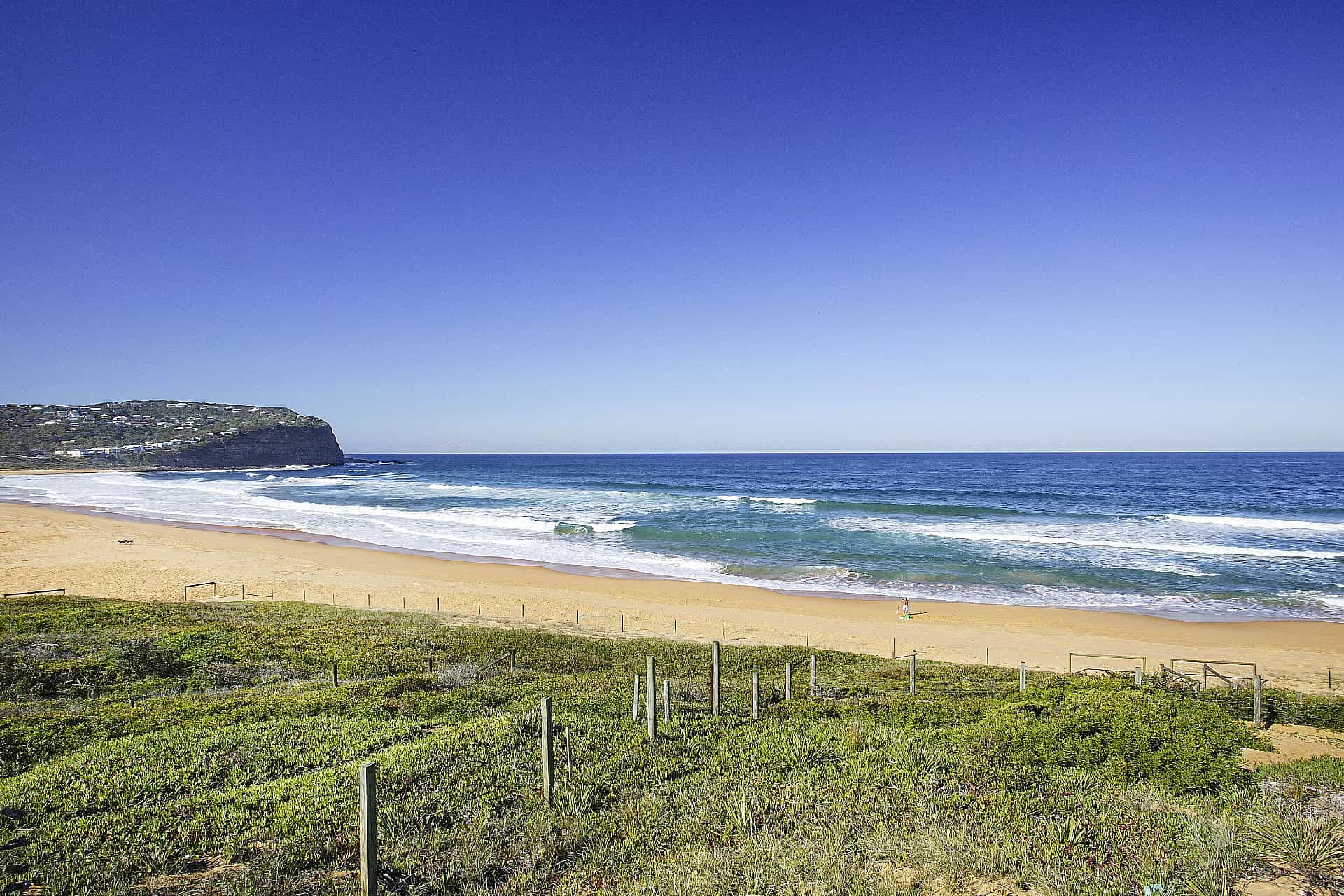
Where Copacabana Is and How to Get There
There's one road in and one road out of Copacabana, and that's exactly why it's stayed the way it has: a handful of streets, a headland with a story most visitors never hear, and a beach that empties out the moment you walk five minutes south. It's the kind of place people stumble onto rather than plan a trip around, and then can't quite explain why they keep coming back.
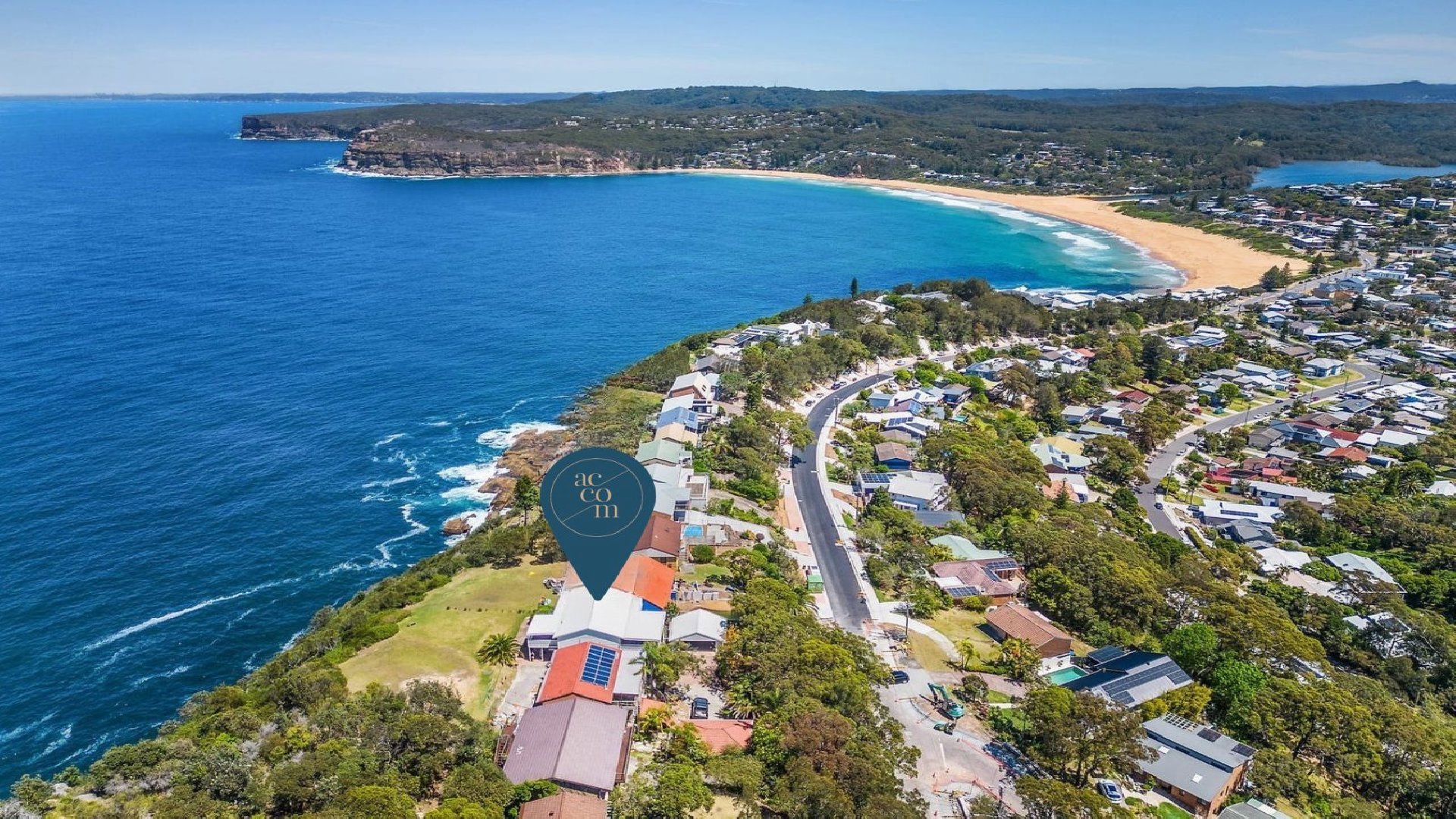
Copacabana sits between Avoca Beach to the north and Macmasters Beach to the south, the two separated by Cochrone Lagoon. It's about 90 minutes from Sydney, and a short drive from Avoca Beach or Terrigal for anything the village itself doesn't cover.
Where Avoca Beach has a working town centre and Wamberal has open space, Copacabana has neither, just a small cluster of streets that empties out fast once you're past the beach car park, and a headland that's been named more times than almost anywhere else on this coast.
Why Copacabana Is Unique
Copacabana is the most unhurried of the Central Coast beach suburbs within easy reach of Terrigal, not because there's nothing here, but because it was built around a one-road-in, one-road-out headland that never grew into anything bigger. That isolation is the whole point: no through traffic, no strip of shops competing for attention, just a beach, a lagoon, and a lookout with more history behind it than its size would suggest.
The Beach, the Rock Pool and Cochrone Lagoon
Copacabana Beach is patrolled, with a rock pool that gives young children a calmer alternative to the open surf, and a whale watching platform right on the beach itself during migration season. Central Coast Council lifeguards cover weekdays, with Surf Life Saving volunteers on duty over weekends and public holidays.
Cochrone Lagoon separates Copacabana from Macmasters Beach and is a genuine local spot for kayaking and fishing, and for dogs to cool off, though it's worth avoiding for a day or two after heavy rain.
Walking south along the sand from Copacabana to Macmasters Beach is flat, easy, and one of the more pleasant short beach walks on this stretch of coast, and it's how most people connect through to the start of the Bouddi Coastal Walk.
Parking is available near the surf club and along the streets backing onto the lagoon, though space is limited given the size of the suburb, so it's worth arriving early on summer weekends.
Is Copacabana Beach dog friendly?
Yes, partly. The off-leash area runs from the southern end of Copacabana Beach down toward Macmasters, roughly 400 to 800 metres depending on the exact boundary, ending near Gerda Road. Cochrone Lagoon is also dog-friendly, though best avoided for swimming after rain.
Dog Friendly Tip
Copacabana's off-leash stretch connects almost all the way to Macmasters Beach, so a walk here can run considerably longer than the beach itself suggests, worth knowing if you're planning a proper morning walk with a dog.
Things to Do Around Copacabana
Several of these are at their best precisely when Copacabana is quietest, outside the summer months:
- Captain Cook Lookout: on the headland above the beach, one of the more reliable whale watching spots on the coast during the May to August migration, and just as good a lookout on a crisp winter morning as a summer afternoon.
- Bouddi Coastal Walk: an 8km one-way walk starting at neighbouring Macmasters Beach, through Maitland Bay and Little Beach into Bouddi National Park, easily reached from Copacabana on foot along the sand.
- The beach walk to Macmasters: a flat, easy stroll connecting the two suburbs, popular with early risers and dog walkers year-round.
- Cochrone Lagoon: for kayaking or fishing on a calmer day when the open beach feels like too much effort.
Casual Dining in Copacabana
Copacabana's food scene is small but real, clustered mostly around Del Monte Place, including Artie's Place at the Surf Club and Burnt Honey Bakery. For anything more, Avoca Beach's larger dining scene is a short drive away.
History and Background
Long before it was called Copacabana, this stretch of coast was known by its Aboriginal names, Tudibaring for the northern headland, said to mean “where the waves pound like a beating heart”, and Allagai for the bay itself. Early European settlers also called the area Judi Barn and Kincumber. It wasn't until 1954 that developers renamed the area Copacabana, borrowing the name from Rio de Janeiro's famous beach to give the new subdivision some appeal.
Copacabana Fact
Copacabana's name is barely 70 years old, a marketing choice by 1950s land developers, while the headland above it has carried a far older name and meaning for a great deal longer. Both are worth knowing before you assume the name tells you anything about the place itself.
The Visitors Copacabana Suits
Couples and small groups after time away from the crowds do better here than almost anywhere else on this stretch of coast. There's no esplanade, no strip of restaurants, just a beach, a headland, and very little else competing for attention.
Families with younger children are well served by the rock pool and the calmer stretch near the lagoon, with Avoca Beach's larger range of shops and dining only a short drive away when needed.
Dog owners after a proper walk, rather than a short stretch of sand, will get more out of Copacabana's off-leash zone than most of the shorter alternatives further along the coast.
What Copacabana isn't is a base for anyone wanting nightlife or much choice at all on their doorstep. That's a short drive away in Avoca Beach or Terrigal. Copacabana is the suburb for people who've already decided that's not what they're after.
Copacabana is also genuinely beautiful through summer, and a quieter option than Terrigal or Avoca Beach for anyone after the same coastline without the crowds. The beach here is still made up mostly of locals rather than day-trippers, and staying in one of our holiday rentals is the easiest way to settle into that rhythm rather than stand out from it.
Autumn and winter suit Copacabana particularly well too. The lookout, the lagoon and the walk to Macmasters all work exactly as they do in summer, and whale season from Captain Cook Lookout is one of the better reasons on this whole stretch of coast to book a winter stay rather than wait for the crowds to arrive.
Where Visitors Choose to Stay in Copacabana
Accom Holidays has managed and let holiday properties on the Central Coast for more than 25 years, with a Terrigal office open seven days a week and 24/7 emergency support for guests and owners. We specialise exclusively in holiday accommodation, across a portfolio of more than 200 properties Central Coast-wide. The properties below are a sample of what's currently available in Copacabana.
-
CLIFFSIDE
305668630225015516000VY
2025-10-13
Copacabana-
5Bedrooms
-
2Bathrooms
-
12Sleeps
From $ 520 per nightExperience the ultimate coastal lifestyle at Cliffside. Positioned on an elevated block with breathtaking 180 degree ocean views all the way to Sydney`s city...
-
-
GUM TREE ESCAPE
305668630225015516000WW
2025-10-21
Copacabana-
4Bedrooms
-
3Bathrooms
-
9Sleeps
-
1Pet Friendly
From $ 186 per nightGum Tree escape is a 4-bedroom, 3-bathroom, pet-friendly home ideal for a relaxed family retreat. Set in a peaceful street and surrounded by leafy gardens,…
-
-
TREETOPS AT COPA
305668630225015516000T6
2025-10-13
Copacabana-
4Bedrooms
-
2Bathrooms
-
8Sleeps
From $ 300 per nightLocated within a 7 minute walk onto the beach, this new and fully renovated upmarket treehouse with views to the water through the trees will…
-
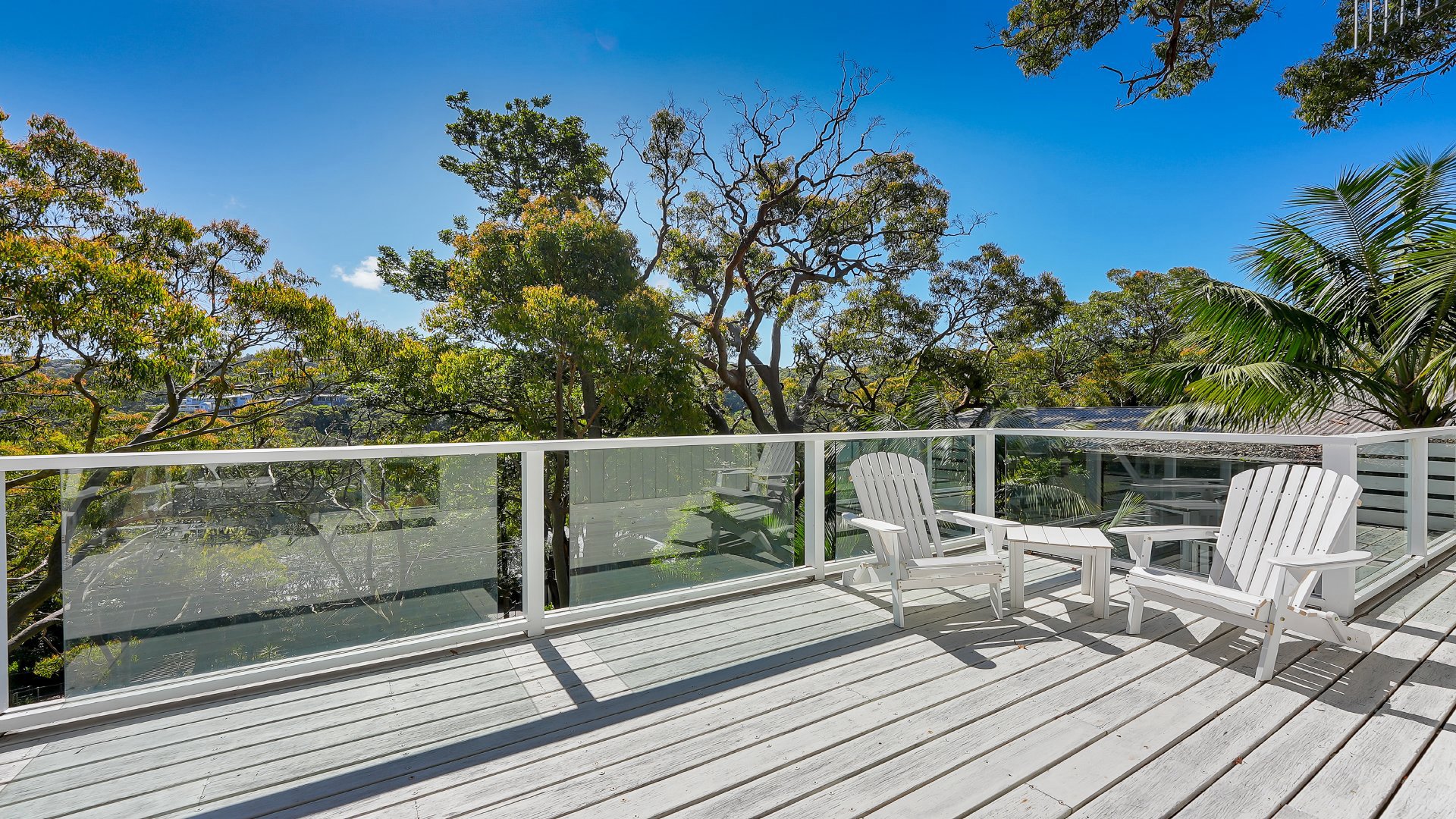
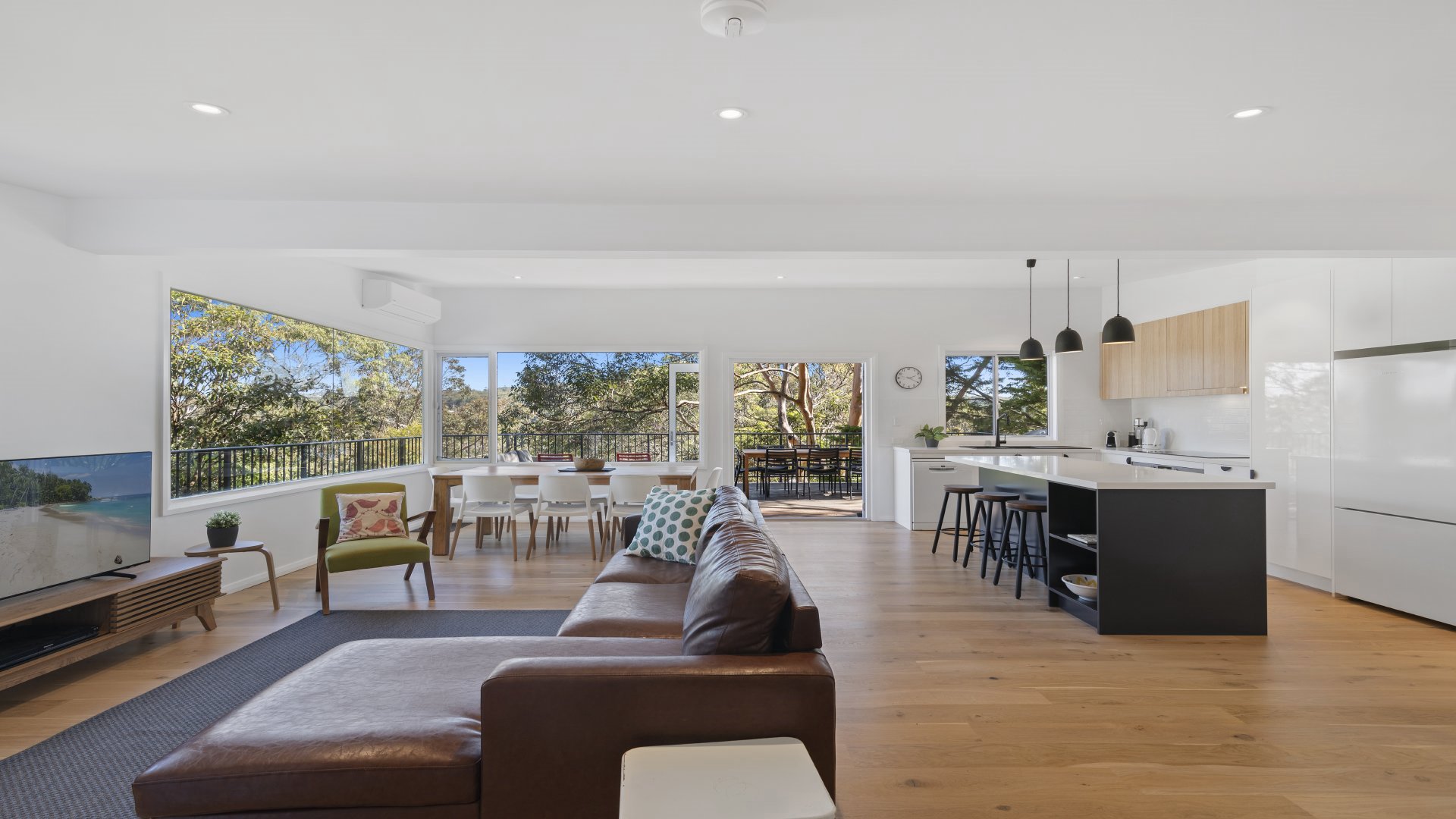
Copacabana's property mix is small and mostly houses, many close to the lagoon or a short walk from the beach, and because the team has been inside these properties personally, they can tell you which ones are the quiet retreat you're picturing and which back onto a busier street, rather than leaving you to guess from photos alone. It's this kind of local knowledge that sets our Copacabana accommodation apart from a listing on a platform.
If you're weighing up Copacabana against a livelier base like Avoca Beach or Terrigal, or need a hand matching a group to the right property, get in touch with the Terrigal office directly. Autumn and winter stays are genuinely worth asking about here, given how little changes outside summer. If you're planning a summer holidays visit, we'd suggest booking well in advance to make sure you can secure one of our holiday rentals, since Copacabana's small portfolio is in strong demand over that period. Otherwise, check availability for your dates through the search above, and let the local team help you find your perfect escape in Copacabana.
Accom Holidays is the Central Coast Holidays accommodation specialists built on a long-tenured local team that personally knows the portfolio, understands guests and owners, and uses that insight to match each guest with the right property.
FAQs
-
How far is Copacabana from Sydney?
Copacabana is about 90 minutes’ drive from Sydney.
-
How far is Copacabana from Avoca Beach?
Copacabana is a short drive from Avoca Beach, generally around 5 to 10 minutes.
-
Is Copacabana Beach dog friendly?
Yes, partly. The off-leash area runs from the southern end of Copacabana Beach down toward Macmasters Beach, roughly 400 to 800 metres, ending near Gerda Road.
-
Is Copacabana good for families?
Yes. The rock pool gives younger children a calmer alternative to the open surf, and Avoca Beach’s larger range of shops and dining is a short drive away.
-
What is Cochrone Lagoon?
Cochrone Lagoon separates Copacabana from Macmasters Beach and is popular for kayaking, fishing and dogs, though it’s best avoided for swimming after heavy rain.
-
What is Captain Cook Lookout?
Captain Cook Lookout sits on the headland above Copacabana Beach and is one of the more reliable whale watching spots on the Central Coast during the May to August migration.
-
What is the Bouddi Coastal Walk?
The Bouddi Coastal Walk is an 8km one-way walk starting at neighbouring Macmasters Beach, running through Maitland Bay and Little Beach into Bouddi National Park
-
Where does the name Copacabana come from?
The area was known by the Aboriginal names Tudibaring and Allagai before developers renamed it Copacabana in 1954, borrowing the name from Rio de Janeiro’s famous beach.
-
Can I walk from Copacabana to Macmasters Beach?
Yes. It’s a flat, easy walk along the sand and a popular route for dog walkers and early risers.
-
Is Copacabana quieter than Avoca Beach or Terrigal?
Yes, noticeably. Copacabana has one road in and one road out, with no esplanade or restaurant strip, making it the quietest option of the three for anyone after genuine seclusion.
-
What is the best time to visit Copacabana?
Autumn and winter suit Copacabana particularly well, since the lookout, the lagoon and the walk to Macmasters all work exactly as they do in summer, and whale season peaks between May and August. Summer is busiest and best booked well ahead if that’s your preference.
-
Is there parking at Copacabana Beach?
Yes, near the surf club and along the streets backing onto the lagoon, though space is limited given the size of the suburb, so it’s worth arriving early on summer weekends.
-
Is Copacabana Beach good for swimming?
Yes. The beach is patrolled, with Central Coast Council lifeguards on duty weekdays and Surf Life Saving volunteers on weekends and public holidays. The rock pool offers a calmer alternative to the open surf for younger children.